


KARANGANYAR – Universitas Diponegoro students participating in the Thematic Community Service (KKN-T) Science and Technology for Undip Assisted Villages (IDBU) Group 19, mentored by Business Administration lecturers from the Faculty of Social and Political Sciences—Dr. Reni Shinta Dewi, S.Sos., M.Si, Dhaifina Idznitia Apriyani Naimi, S.M., M.B.A., and Wildan Avian Pratama, S.A.B., M.A.B.—introduced various waste management innovations in Kalisoro Village, Tawangmangu District, Karanganyar Regency. During the program, the students not only educated the community on the importance of sorting waste from home, but also produced several waste management facilities that can be directly used by the residents.
“This program stemmed from observations showing that there are still several challenges in waste management in Kalisoro. Some residents are not yet accustomed to sorting waste at home, the volume of organic waste is still quite high, and inorganic waste that actually has economic value has not been utilized optimally. Based on these conditions, the students introduced various simple solutions that are easy to implement and are expected to be continuously used by the community,” said Dr. Reni Shinta Dewi, S.Sos., M.Si., as the head of the KKNT IDBU 19 team.
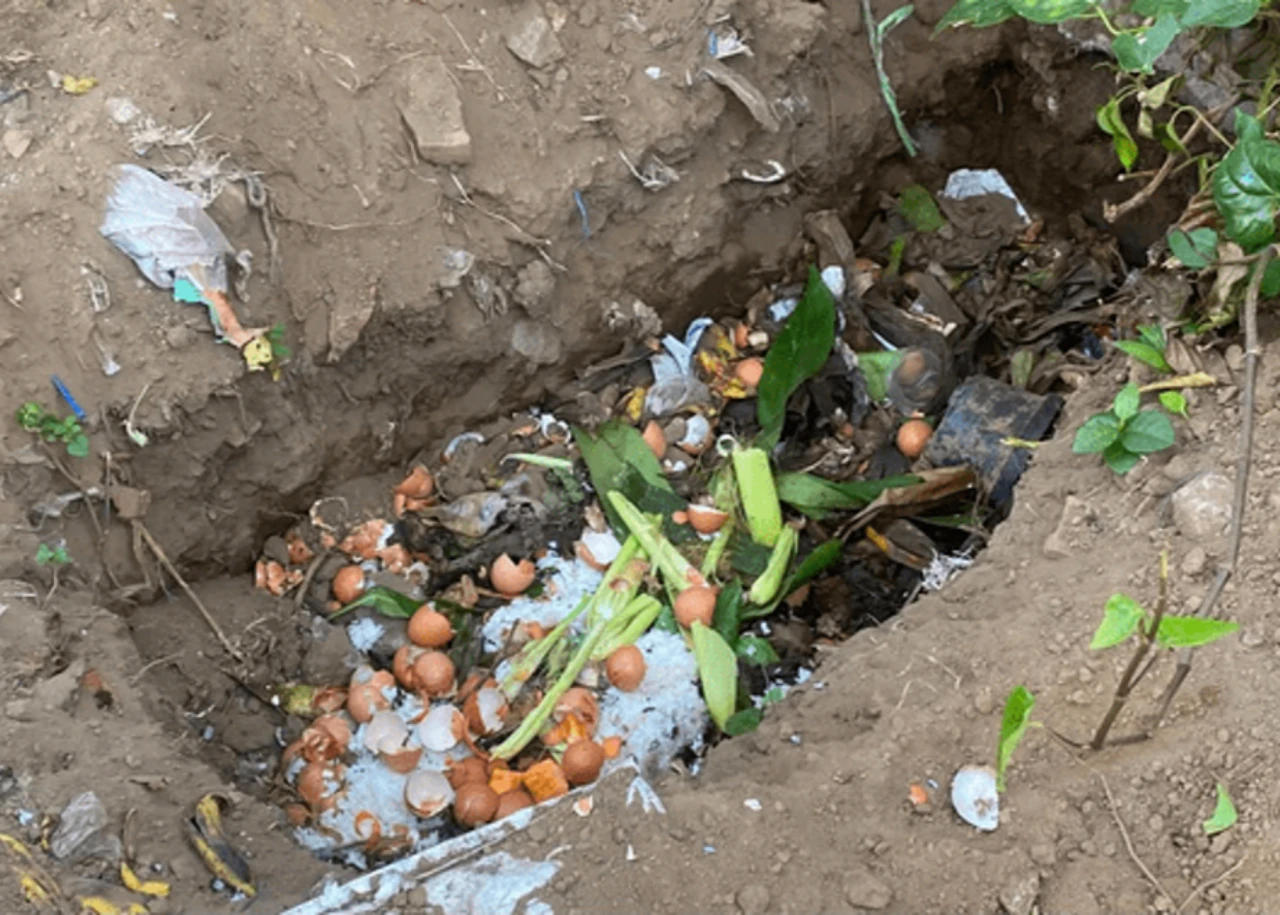
Some of the outputs produced include household composters, Kitchen Waste Infiltration Holes (Lubang Resapan Sisa Dapur or LuSiDa), Pawuhan as an organic waste processing medium, a plastic bottle press tool, and trash bins made from used gallon containers and wire mesh, which were distributed to schools in Kalisoro Village.
One of the introduced innovations is the household composter to process organic waste into compost fertilizer. Additionally, the students created LuSiDa and Pawuhan as alternative methods for processing kitchen waste directly in home yards. This method not only helps reduce the amount of waste sent to landfills, but also serves to improve soil fertility around the house. Through demonstrations and mentoring, residents were invited to practice converting organic waste into something more useful while reducing pollution caused by waste accumulation.
The impact of the program is already being felt by the community. “Now, accumulated waste is almost non-existent. Community awareness of sorting waste is improving. After learning how to make Pawuhan, LuSiDa, and composters, residents are also able to process their own organic waste, so waste in the neighborhood is far more controlled,” said Mr. Sukatmin, Head of RT 2 RW 4.

For valuable inorganic waste management, the KKNT IDBU-19 Team mentored the establishment and strengthening of a waste bank (bank sampah) in Kalisoro Village. Through this program, residents are encouraged to sort waste with economic value so it can be collected, managed, and utilized through the waste bank. This mentoring aims to build the habit of sorting waste while unlocking economic opportunities from inorganic waste.
Meanwhile, for the management of non-valuable inorganic waste, the KKNT IDBU-19 Team and the Kalisoro community built a rocket stove as a supporting innovation. This device burns non-valuable inorganic waste efficiently while producing lower smoke emissions, making it a more environmentally friendly waste-treatment alternative.
Meanwhile, in several schools across Kalisoro Village, the KKNT IDBU-19 Team handed over plastic bottle press tools as supporting facilities for inorganic waste management. The tool helps reduce the volume of plastic bottles, making them easier to store and collect. The KKN team also distributed trash bins made from used gallon containers and wire mesh to encourage waste-sorting habits from an early age, while introducing the reuse of secondhand items into functional products.
The Head of the KKNT IDBU-19 Team expressed that all the developed innovations were designed to be simple, easy to implement, and continuously usable even after the KKN program ends.
“We hope these various innovations do not just stop as KKN outputs, but instead become new habits for the community. Starting from innovative products like composters, LuSiDa, Pawuhan, the rocket stove, plastic bottle presses, to plastic bottle trash bins in schools, everything is expected to encourage residents to manage waste independently in Kalisoro while providing both environmental and economic benefits,” he stated.
Through this series of programs, the Diponegoro University (Undip) KKNT IDBU-19 Team hopes to strengthen the community-based waste management system in Kalisoro Village while supporting the achievement of the Sustainable Development Goals (SDGs)—specifically SDG 11 (Sustainable Cities and Communities) and SDG 12 (Responsible Consumption and Production)—by reducing waste generation, reusing second-hand materials, and promoting more sustainable waste management practices.
Penulis: Tim KKN-T IDBU-19 Undip 2026